First IDC Webinar - a promising start
When deacons are functioning well, the Church is functioning well, said Bishop Shawn McKnight, Archbishop of Kansas City, on the first IDC webinar in April 2026.
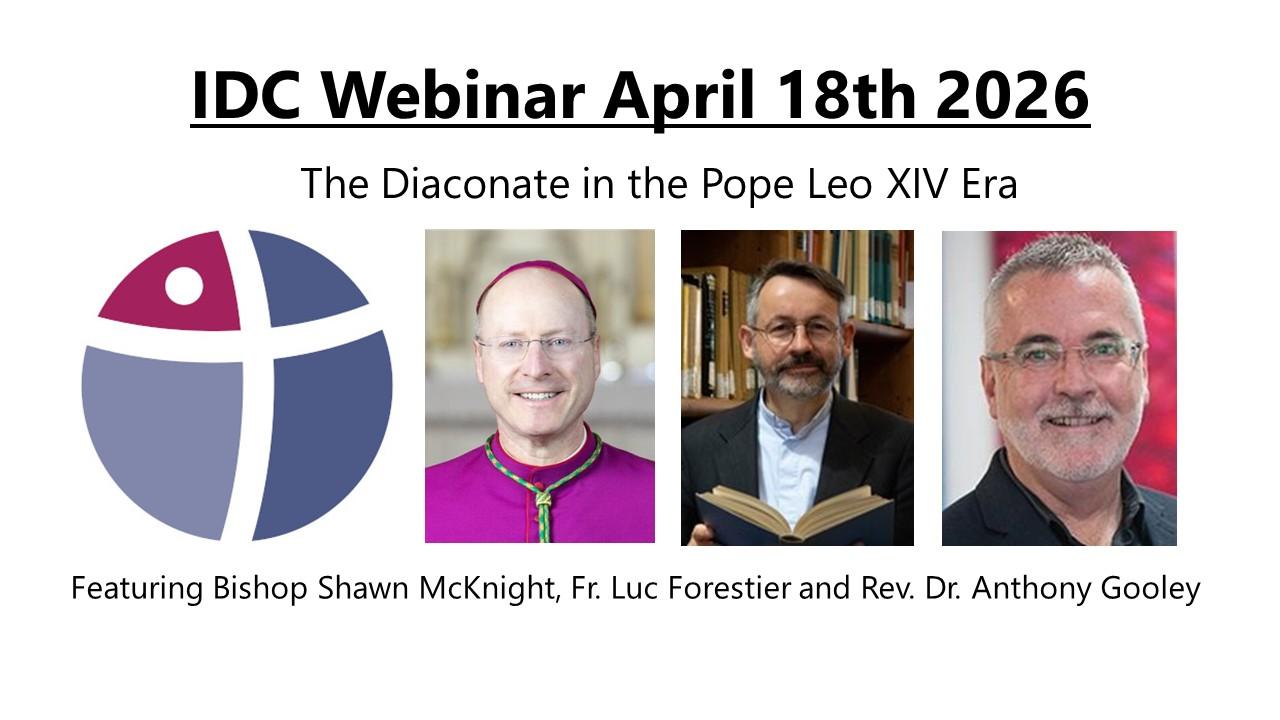 The webinar featured three guest speakers who were asked to speculate on where the diaconate may go under the leadership of Pope Leo XIV. Bishop McKnight was joined by French priest and theologian, Luc Forestier, and Australian deacon, theologian and author, Anthony Gooley.
Bishop McKnight is the author of ‘Understanding the Diaconate, Historical, Theological, and sociological foundations’ which provides a critical understanding of diaconal ministry and the forms it can take now and well into the future. On the IDC webinar, Bishop McKnight said: “I believe the diaconate is a most fitting subject matter in our discernment on how to be a more missionary and synodal Church, especially when one considers the necessity of a culture of co-responsibility for the church to become what Christ intends us to be in our day. (…) “I strongly believe that the diaconate remains an untapped resource for the church to help with the pastoral conversion of the church as dreamed not only by Pope Francis, but by every Pope from St. John XXIII forward.”
Bishop McKnight described the diaconate as an indicator of church health: “One thing I have noticed in my pastoral experience as bishop is that when deacons are functioning well … everything else about the parish, or about the church seems to just fall into place. The diaconate is something of a bellwether indicator of ecclesial health.” He said, deacons serve the body of Christ in a way that no other member of the assembly can. “While their ministry is not specified by a function unique to them, the charism of deacons is to be a prophetic, sacramental symbol of Christ who came not to be served, but to serve.”
Fr Luc Forestier spoke of the coming 2028 Ecclesial Assembly confirmed by Pope Leo as a key global Church gathering which he predicts will discuss the diaconate. Fr Luc is a priest of the Diocese of Marseille on a mission at the Catholic University of Lille, in the Faculty of Theology. He co-founded “Diakonos”, an Ecumenical, International and Interdisciplinary group on diaconate. He spoke of some worrying signs for the Diaconate in statements by Pope Leo but also some encouragement. The encouragement was in an apostolic letter on the sixtieth anniversary of the publication of the conciliar decrees ‘Optatam Totius and Presbyterum Ordinis’ (‘A fidelity that generates the future’). In paragraph 18 of this document, Pope Leo states: “… it must be remembered that priestly communion can never be established by the standardization of individuals and the charisms or talents that the Lord has granted to each one. … all ordained ministers are called to live in communion by returning to what is essential and being close to people, in order to preserve the hope that takes shape in humble and concrete service. In this context, the ministry of the permanent deacon, configured to Christ the Servant, is a living sign not of a superficial love but one that bends down, listens and gives generously. The beauty of a Church made up of priests and deacons who cooperate, united by the same passion for the Gospel and attentiveness to those most in need, becomes a shining witness of communion. … For this reason, the diaconal ministry, especially when lived in communion with one’s family, is a gift to be understood, valued and supported. The discreet but essential service of men dedicated to charity reminds us that the mission is not accomplished with grand gestures, but by a united passion for the Kingdom and daily fidelity to the Gospel.”
Fr Luc said, this is a sign that, for Pope Leo “there is this as a decisive place for deacons. … and above all, the Diaconate is an indicator of the authenticity of the synodal processes…”
Australian deacon, theologian and author, Anthony Gooley, speculated that a program for Pope Leo on the diaconate might be one that involves, “open public dialogue, scholarly engagement, open dialogue, reinterpreting the ancient ministry of diaconate for our times.” He desired that it could “creatively and boldly unleash the grace and gift of the diaconate for the church so that we form men, (perhaps who knows women in the future) who would be true heralds of the gospel, going out to places where the church is not and bringing people into the church to find contact with Christ.”
A full recording of the webinar is available for IDC members.
If you are interested, please contact us via E-Mail.