The present and the future of the diaconate in Africa
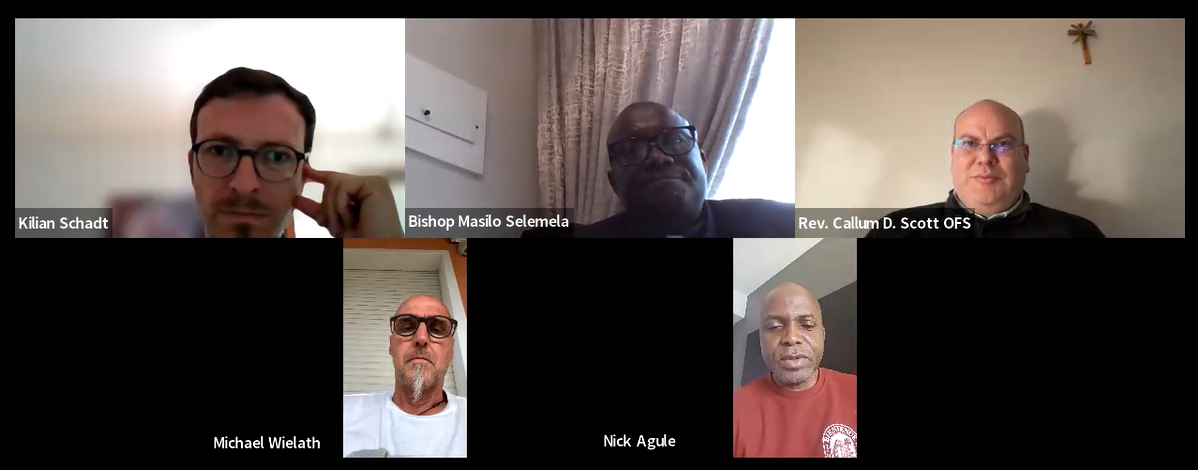
Virtual Meeting on Wednesday, 15th July 2026, focusing on the present situation of the permanent diaconate in African countries, and considering how the IDC might collaborate with bishops throughout the African continent to encourage the vocation of the deacon.
 by Rev. Deacon Callum D. Scott OFS, Pretoria, South Africa
Kilian Schadt, the IDC director along with Deacon Callum Scott OFS (IDC delegate for Africa, Archdiocese of Pretoria, South Africa) met virtually on Wednesday, 15th July 2026 with Bishop Masilo Selemela, the auxiliary bishop of the Archdiocese of Pretoria, who is also the chair of the Southern African Catholic Bishops’ Conference’s Department for the Life and Ministry of Clergy, and IDC member Deacons Adolf Kinda (Diocese of Keetmanshoop, Namibia), Michael Wielath (Diocese of Rottenburg-Stuttgart, Germany and Radio Horeb/Radio Maria), and Nick Agule (Diocese of Westminster, England), who is of Nigerian origin. The meeting focused its discussions on the present situation of the permanent diaconate in African countries, and considered how the IDC might collaborate with bishops throughout the African continent to encourage the vocation of the deacon. The participants’ experiences from across Africa enriched the discussions, highlighting reasons for the non-restoration of the diaconate in African dioceses, problems faced by existing deacons, and opportunities for growth in the diaconal vocation.
Whereas other continents are facing a decline in vocations to the priesthood and the consecrated life, in large parts of Africa, this is not the case. This mirrors the exponential growth of the Church in Africa, which as one of the participants noted, is the future of the Church. And while the participants emphasised that the diaconate is not a stop-gap for the decline in vocations to the priesthood, it was acknowledged that in many dioceses, bishops may simply not see the need for deacons given their present complement of pastoral personnel, they may not be able to see the institution of a diaconal formation programme as financially viable, and many ministries that are undertaken by deacons in other parts of the Church are already taken up by the laity (for example, the ministry of funerals, visiting the sick, etc.).
However, the participants felt it important to highlight that the diaconate has its place, not only from a theological perspective, but increasingly in the synodal church, as the Universal Church move towards a collaborative understanding of ministry. Consequently, it is hoped that both bishops and priests could be better catechised on the vocation of the permanent diaconate, especially in local churches where some interest in the vocation is shown. It is our hope, with the IDC, to develop some resources, and to assist bishops in particular who show interest in renewing the diaconate in their dioceses.
We hope to have further such engagements in the future, as this one was marked by an openness and frankness which all participants appreciated. The participation of Bishop Selemela was particularly valued.
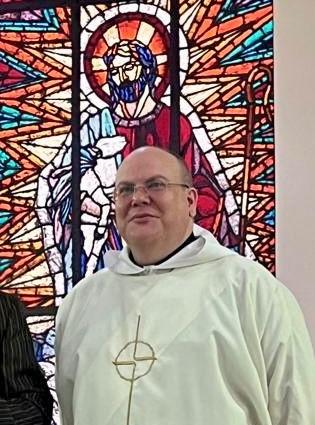 The author: Rev. Deacon Callum D. Scott OFS lives in the Archdiocese of Pretoria, South Africa and is an IDC Delegate for Africa.